
Description
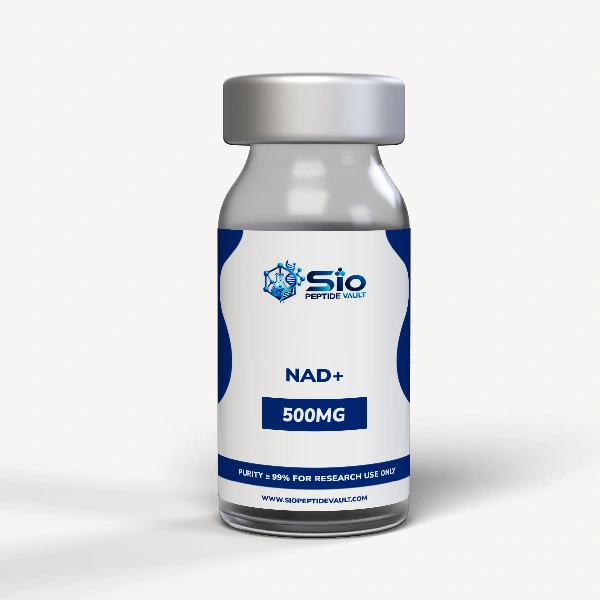
NAD+ Research Compound
Searching for peptides for sale near me often leads researchers to suppliers offering a range of laboratory compounds and research materials. NAD+ is one such research compound, although it is important to note that NAD+ is not a peptide. It is a small-molecule coenzyme known as Nicotinamide Adenine Dinucleotide and is used in controlled biochemical and molecular research.
This NAD+ research compound is supplied in lyophilized powder form to support laboratory storage, handling, and transportation. Each batch may be accompanied by batch-specific analytical documentation through the RCHQ COA Library.
NAD+ is supplied strictly for research-use-only applications. It is not intended for human or animal consumption, medical use, therapeutic use, diagnostic use, dietary supplementation, food use, cosmetic use, or compounding.
NAD+ Research Compound Overview
NAD+ is a naturally occurring coenzyme involved in numerous biochemical processes. In laboratory research, scientists may investigate its role in oxidation-reduction reactions, enzymatic systems, electron-transfer mechanisms, and cellular pathway models.
For researchers comparing peptides for sale near me, NAD+ represents a different category of research material because its molecular structure does not consist of an amino-acid peptide sequence.
Key Product Information
- Product Name: NAD+
- Full Name: Nicotinamide Adenine Dinucleotide
- Compound Class: Small-molecule coenzyme
- Molecular Formula: C21H27N7O14P2
- Molecular Weight: 663.43 g/mol
- Sequence: N/A — NAD+ is not a peptide
- Physical Form: Lyophilized powder
- Purity: Batch-specific; refer to the applicable COA
- Intended Use: Laboratory and scientific research only
NAD+ Research Applications
NAD+ may be investigated in controlled laboratory environments for a variety of biochemical research applications, including:
- Oxidation-reduction and electron-transfer studies
- Coenzyme-dependent enzymatic activity research
- Mitochondrial-associated pathway models
- Intracellular signaling research
- Compound stability and degradation studies
- Analytical and biochemical assay development
Research should be conducted by qualified personnel using appropriate laboratory procedures and controlled experimental conditions.
NAD+ Storage and Handling
Proper storage is important when working with lyophilized research compounds. Researchers should follow their laboratory’s established storage and handling procedures.
General storage considerations include:
- Store lyophilized material in a cool, dry environment
- Long-term storage may be maintained at -20°C / -4°F, where appropriate
- Following reconstitution, storage at 2–8°C / 36–46°F may be appropriate depending on the laboratory protocol
- Avoid unnecessary exposure to heat, moisture, and light
- Minimize repeated freeze-thaw cycles
- Follow appropriate laboratory handling and aseptic procedures
Researchers should always consult the applicable product documentation and internal laboratory protocols for compound-specific handling requirements.
Quality Control and Certificate of Analysis
When researching peptides for sale near me or other laboratory compounds, documentation and quality information are important considerations.
NAD+ batches may be supported by batch-specific analytical documentation. Depending on the applicable testing package, documentation may address:
- Compound identity
- Purity
- Quantity verification
- Sterility
- Endotoxin testing
Researchers should review the Certificate of Analysis (COA) associated with the specific batch for current analytical results.
NAD+ vs Peptides
NAD+ should not be confused with peptide research compounds.
Peptides are molecules composed of amino acids linked together through peptide bonds. NAD+, by contrast, is a small-molecule coenzyme with a distinct molecular structure and function.
This distinction is useful when searching for peptides for sale online, research peptides for sale, or other laboratory research materials because products can belong to very different chemical classes.
Finding Research Compounds Near You
Researchers searching for peptides for sale near me may also encounter other laboratory compounds such as NAD+, depending on the supplier’s catalog.
Before purchasing any research material, review:
- Product identity
- Chemical classification
- Batch information
- Purity documentation
- Certificate of Analysis
- Storage requirements
- Intended-use restrictions
- Applicable laws and regulations
Choosing materials based on accurate product information helps researchers identify the appropriate compound for their laboratory work.
Frequently Asked Questions
Is NAD+ a peptide?
No. NAD+ is a small-molecule coenzyme, not a peptide.
What is NAD+?
NAD+ stands for Nicotinamide Adenine Dinucleotide. It is a coenzyme studied in biochemical and molecular research.
Is this NAD+ product intended for human use?
No. This product is supplied strictly for laboratory, analytical, and scientific research purposes and is not intended for human or animal consumption.
Does NAD+ have a peptide sequence?
No. Because NAD+ is not a peptide, its sequence is listed as N/A.
What should researchers check before purchasing?
Researchers should review the product identity, batch-specific COA, analytical information, storage requirements, and applicable research-use restrictions.
Research-Use-Only Disclaimer
NAD+ is sold strictly for research use only.
This product is not intended for human consumption, animal consumption, medical use, diagnostic use, therapeutic use, dietary supplementation, food use, cosmetic use, or compounding.
The product has not been evaluated or approved by the FDA for any of these uses. Buyers are responsible for ensuring that their purchase and use comply with applicable federal, state, and local requirements.
For qualified laboratory, analytical, and scientific research purposes only.





Reviews
There are no reviews yet.